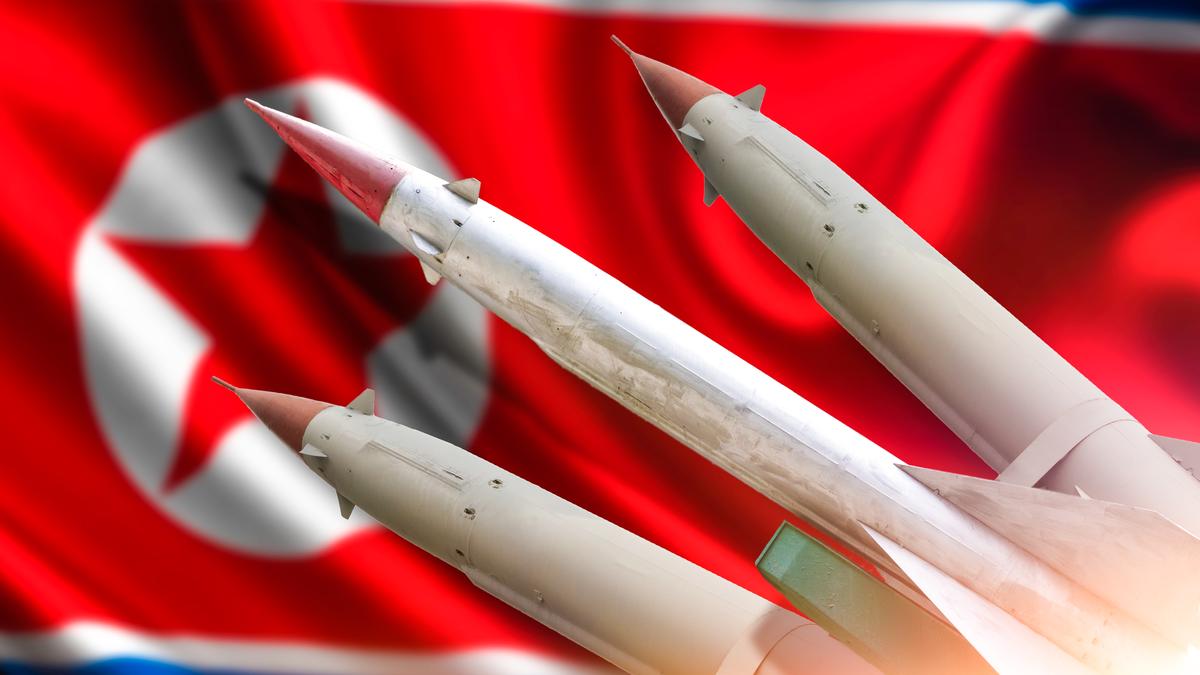
A reported test in eastern waters
The account places the launches in North Korea’s eastern waters on October 14. Multiple international outlets reported the event, but the underlying launch details were attributed to KCNA and North Korean state media. The available material therefore establishes that a missile test was reported, rather than independently confirming every technical detail of the operation. The location was described as the East Sea, a name also used for the Sea of Japan, and as waters off North Korea’s east coast. That geographic description identifies the broad testing area without establishing the missiles’ flight path, range or performance.
North Korean state media characterized the weapons as strategic cruise missiles designed to be launched from submarines. It said the exercise was intended to assess the readiness of underwater combat systems and improve the Navy’s ability to carry out strategic missions. Those objectives are part of Pyongyang’s account of the test, not an independent assessment supplied by the reporting. The language nonetheless shows how North Korea presented the event: not simply as a test of a conventional weapon, but as a demonstration connected to strategic military capabilities and the country’s broader deterrence claims.
KCNA also said the launches demonstrated or examined the reliability of North Korea’s strategic or nuclear deterrent. It further said they had no adverse impact on neighboring countries. Both claims were reported as statements from KCNA or North Korean state media. The supplied evidence does not independently establish how the test affected regional security, nor does it provide outside technical confirmation of the deterrent-related description. The distinction matters because the central claims about purpose, reliability and regional impact come from the government that conducted and publicized the test.
The launch platform remains unclear
Although several reports described the weapons as submarine-launched, the available reporting does not resolve whether an operational submarine actually fired them. The Hindu reported that the North Korean account did not specify whether the missiles were launched from an actual submarine or from an underwater test platform. That leaves an important technical distinction open. The test concerned missiles designed for submarine launch, but the supplied material does not establish the operational status of the vessel or platform involved. It also does not show that North Korea has demonstrated a fully operational submarine-based launch capability in this particular event.
The uncertainty extends beyond the launch platform. The evidence does not establish the flight distance, detailed technical performance or the model of the second missile. Al Jazeera reported that KCNA identified one of the weapons as the Pulhwasal-3-31, but that identification remains attributed to KCNA and is not independently corroborated in the supplied material. It should therefore be treated as a reported designation rather than a fully verified technical finding. No equivalent identification for the other missile is established in the available sources.
A test framed as part of deterrence development
The stated purpose of the exercise connects three elements in North Korea’s own presentation: underwater combat-system readiness, naval capacity for strategic missions and the reliability of its strategic or nuclear deterrent. The sources support reporting those elements as the rationale given by KCNA and North Korean state media. They do not support a broader conclusion about how close North Korea may be to deploying the system, how effective it would be in a conflict or whether the test met an operational benchmark. Those questions remain outside the evidence supplied for this report.
The report also places the missile activity within a wider period of military and political tension. The tests followed heightened inter-Korean tensions after a September 21 landmine explosion in the Demilitarized Zone injured three South Korean soldiers. The supplied reporting says the incident contributed to friction between Pyongyang and Seoul. That chronology provides the immediate regional context for the test, but it does not establish that the landmine explosion caused the missile launches or determine the specific decision-making behind them.
What the sources establish
The core event is supported by several reports: North Korea said its military tested two types of cruise missiles designed for submarine launch, and the test was reported as occurring on October 14 in waters off the country’s east coast. The descriptions of the missiles as strategic, and of the exercise as a test of underwater combat readiness and naval strategic-mission capability, come from North Korean state media. KCNA’s additional statements about the nuclear or strategic deterrent and the absence of adverse effects on neighboring countries are likewise claims carried by the state news agency.
What the supplied sources do not establish is equally important. They do not provide independent confirmation from South Korean authorities of the reported missile test. The Hindu reported that South Korea’s military did not immediately comment, while the other supplied accounts also framed the launch information as coming from KCNA or North Korean state media. The absence of confirmation in this material does not disprove the test; it limits how precisely the event can be described and prevents the reported technical details from being presented as independently verified.
Regional significance, within the evidence
The reported exercise adds a submarine-linked dimension to North Korea’s recent strategic weapons activity, but the supplied evidence supports that conclusion only at the level of the stated design and purpose of the missiles. It does not establish a new deployment, a successful operational patrol or a change in the military balance. The significance lies in what Pyongyang said it was testing: the ability to connect underwater systems with strategic naval missions and deterrence. Whether that ambition has translated into a reliable operational capability remains unresolved because the launch platform, technical performance and independent verification are not established.
For now, the most defensible account is a reported North Korean test of two submarine-designed strategic cruise missiles in the East Sea on October 14. KCNA presented the exercise as a check on underwater combat readiness and strategic deterrence, while the available reporting leaves open whether an operational submarine was used and whether the stated technical aims were achieved. The event occurred against a backdrop of strained inter-Korean relations following the September 21 DMZ landmine explosion, but the supplied evidence does not establish what further military or diplomatic consequences may follow.