A direct test before undecided voters
The Guardian describes the forum as a face-to-face encounter between Talarico and several voters who had not decided how they would vote. The format placed the candidate in direct contact with people pressing him on both foreign policy and divisive domestic questions, rather than limiting the discussion to a prepared campaign message. The supplied report does not identify the town hall’s precise location, nor does it give a complete number or list of the participating voters. It does, however, portray the exchange as a public test of whether Talarico could persuade voters beyond his party’s core supporters.
According to The Guardian, the questions covered Israel’s military campaign in Gaza, abortion and foreign aid. Those subjects put several dimensions of Talarico’s political positioning under scrutiny at once: his approach to an international conflict, his position on a major moral and electoral issue, and his view of the United States’ obligations abroad. The source does not provide a complete transcript of every exchange or identify a separate policy proposal for each topic. Its account instead establishes the range of issues that undecided voters chose to raise during the CNN event.
Faith becomes a central point of confrontation
One exchange focused on Talarico’s religious identity. The Guardian reports that a devout small-business owner questioned whether Talarico’s faith was authentic and referred to a past remark in which he described God as nonbinary. The question connected a personal issue—whether the candidate’s beliefs could be trusted—with the broader political challenge of appealing to religious voters while maintaining a distinctive public identity. The report presents the exchange as a pointed challenge from a voter, not as an independently verified assessment of Talarico’s faith.
The source’s account of the faith exchange also shows why personal language can become politically consequential in a Senate campaign. A previous formulation about theology was brought into the town hall as evidence the voter believed raised doubts about Talarico’s sincerity. The Guardian does not establish that the remark represents Talarico’s current theological position beyond reporting the voter’s reference to it. What it does document is that the issue was used to test whether the candidate could explain or defend his religious views in front of an audience that included a self-described devout voter.
Abortion and the search for common ground
Abortion was another major point of questioning, according to The Guardian. The source describes voters pressing Talarico on the issue as he sought to present himself as a moderate. In that setting, the subject was not simply a question of party affiliation: it was also a test of whether he could speak to voters who approach abortion through religious or moral commitments. The supplied material does not provide an independently verified measure of how the exchange affected those voters, so its significance is best understood as part of the scrutiny he faced rather than as evidence of a change in their views.
The Guardian’s description places Talarico’s response to the abortion question within a broader effort to find shared ground with voters who may disagree with him. The candidate was presented as arguing for a distinction between differing moral conclusions and a possible common public-policy objective. Because the supplied Fact Lock records only that voters questioned him about abortion, the article cannot independently establish the full details of his proposal or predict whether the exchange would persuade Catholic voters, conservatives or other undecided participants. The documented point is that abortion formed part of the evening’s direct challenge to his moderate positioning.
A moderate message in a competitive race
During the town hall, Talarico presented himself as a moderate who would put Texans’ needs above party allegiances, The Guardian reports. That message gave the appearance a clear strategic purpose: the candidate was not only answering individual questions but also explaining how he wanted voters to understand his place in a closely contested statewide race. The source also describes him as directing criticism at the ultra-wealthy, framing economic concentration as a common political concern. The report does not establish whether this approach changed the race’s standing or produced a measurable shift in support.
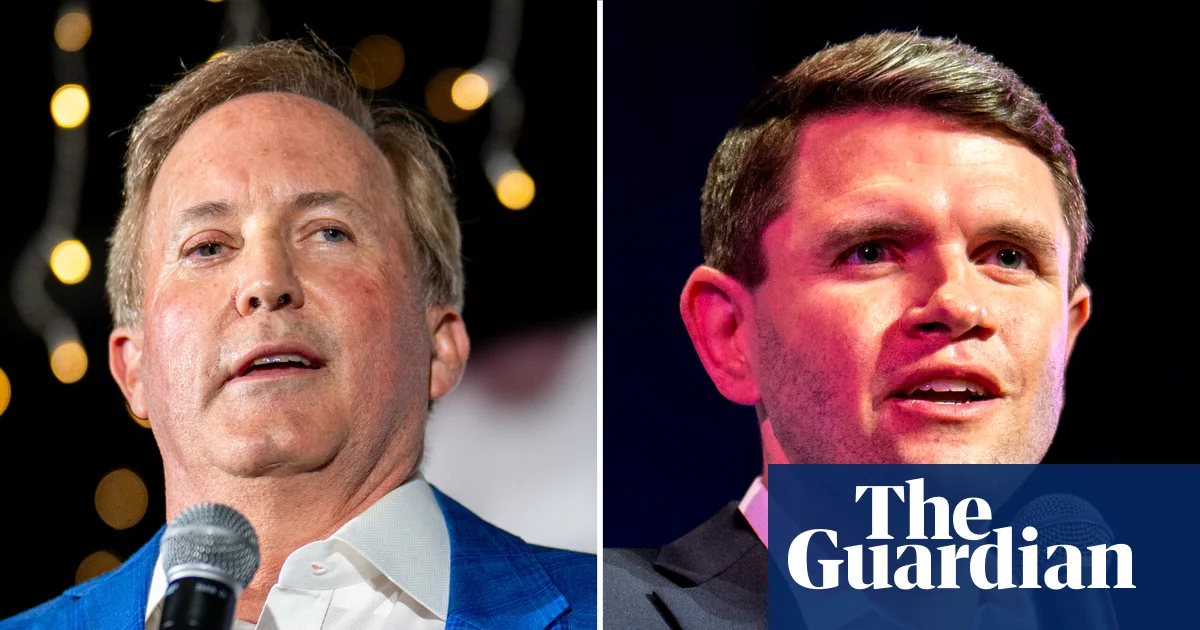
The contest is described by The Guardian as a competitive race between Talarico and Republican nominee Ken Paxton for Texas’s next U.S. Senate seat. The newspaper says recent polls showed Talarico with a narrow lead, but the supplied evidence provides no pollster, field dates, sample size or precise margin. That limitation matters: the description supports the characterization of a close contest, not a definitive prediction of the result. Within that uncertainty, the town hall gave Talarico an opportunity to speak directly to the voters whose choices could matter in a race the source portrays as unsettled.
Paxton’s absence and the limits of the record
Ken Paxton did not appear alongside Talarico. According to The Guardian, CNN host Erin Burnett said Paxton had declined an invitation to take part in the town hall. That account makes Paxton’s absence part of the event’s political context, although the supplied material does not include a statement from Paxton explaining his decision. The forum therefore became a setting in which Talarico’s positions and personal record were examined without a corresponding appearance by his Republican opponent, at least within the event described by the source.
The Guardian’s report also places the televised appearance within a campaign environment marked by competing claims and political pressure, but the Fact Lock supports a cautious treatment of that wider context. The central documented development is the CNN town hall, the questions from undecided voters and Talarico’s effort to define himself as a moderate. The source agreement is single-source: no independent corroboration or official statement about the event has been supplied. Readers should therefore distinguish between what The Guardian reports about the evening and what remains unverified beyond that account.
The supplied excerpt also leaves several basic details unresolved. It does not specify the exact venue, give the full names of the voters or state the total number who participated. Nor does it provide independent confirmation of the event from CNN, the campaign or the voters themselves. The Guardian’s identification of Talarico as the Texas Democratic Senate nominee is the basis used here, despite a conflicting image-caption label in the same excerpt that identifies him as “(R).” That inconsistency does not alter the headline, summary and body’s description of him as a Democrat, but it is a reason to preserve attribution rather than present every detail as independently confirmed.
Taken together, the account portrays a candidate trying to convert a televised confrontation into a broader argument about political independence. Talarico was questioned on foreign affairs, abortion and faith, while presenting himself as someone who would place Texans’ needs before party loyalty. The Guardian’s account supports describing the town hall as a significant public test of that message, particularly in a race it characterizes as competitive. It does not support claiming that the appearance settled the contest, persuaded any named voter or established a change in the polling lead.