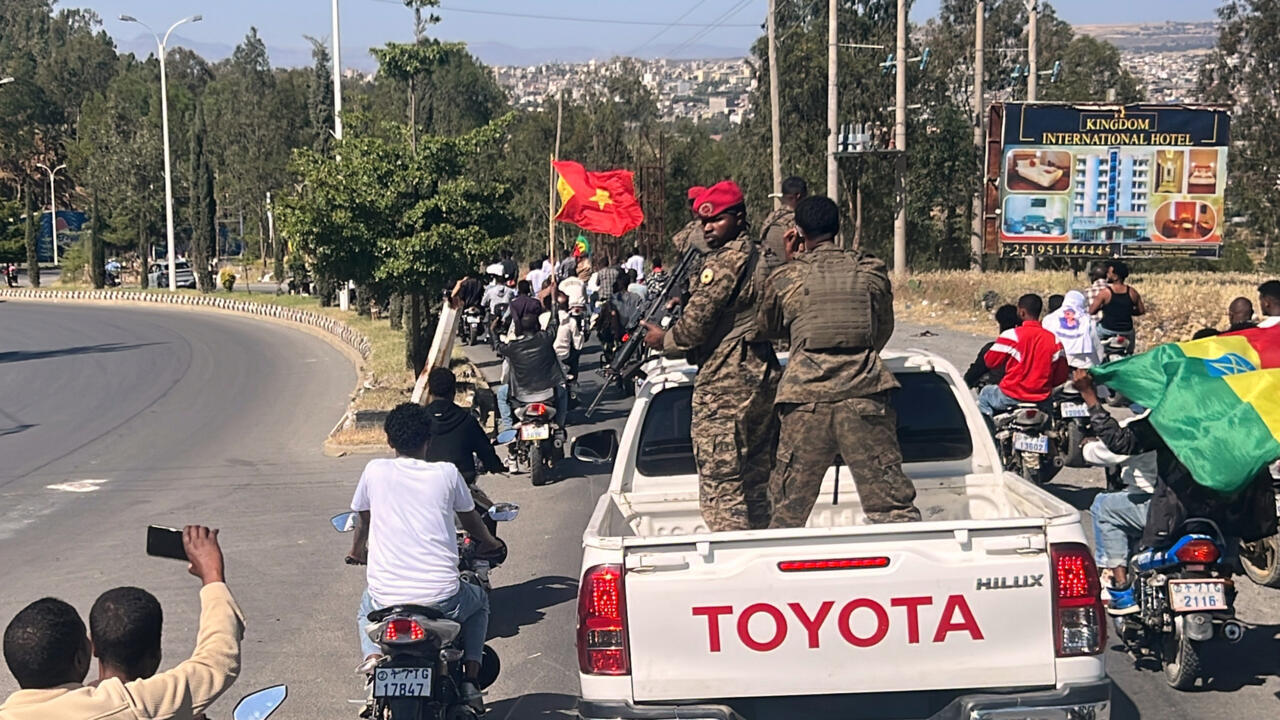
A transitional administration after renewed fighting
The announcement places Tigray under a temporary governing arrangement after federal forces re-established control over the region, according to the supplied reports. The move is intended to provide an interim authority while conditions are created for elections, but the sources do not establish the administration’s full membership, its precise powers or the procedures that would govern the vote. The announcement therefore sets out a political timetable without resolving how authority will be exercised during the transition.
The available reporting identifies five officials appointed to administer Tigray, including the mayor of the regional capital, Mekelle. That provides a partial picture of the new structure, but not a complete list of its members or a detailed description of their responsibilities. The six-month period is presented as the administration’s operating horizon and as the period in which it is expected to create conditions for free elections. No specific polling date is given in the supplied material.
Al Jazeera reported that the five officials would operate under directives and instructions from Ethiopia’s federal government. That account makes the relationship between the interim administration and Addis Ababa an explicit part of the reported arrangement, while the other supplied sources agree on the appointment and election timetable without providing the same level of detail about operating instructions. The precise division of authority between the federal government and the interim administration remains unspecified in the material available for this report.
A disputed political and military chronology
The appointment followed an escalation involving Ethiopian federal forces and the TPLF or allied armed groups. The reports use different descriptions of the fighting, including an uprising, an offensive, renewed clashes and a broader escalation, but they consistently connect the establishment of the interim administration to the recent military confrontation. That shared chronology is clear even though the supplied accounts do not present identical descriptions of the military situation or of the TPLF’s role.
The supplied reports place the latest TPLF offensive or uprising in September 2026. The Hindu reported that the TPLF launched a major offensive on September 23, while Al Jazeera described an offensive launched in September. The accounts say the group was subsequently pushed back and lost control of strongholds, including Mekelle, before the federal government announced the interim arrangement on October 16. The reporting establishes this sequence but does not independently resolve every aspect of the conflict or the conduct of the parties involved.
Tigray had previously been controlled or governed by the TPLF before the latest federal takeover. The party’s position in the region is central to the political context of the announcement: the new administration is being installed after a period in which Tigray stood outside effective control from Addis Ababa, according to the supplied source material. The reports also connect the latest confrontation to an earlier political rupture, while leaving the future role of the TPLF in the planned electoral process unresolved.
The shadow of the 2020–2022 war
The recent escalation has been described as connected to, or as reviving, the Tigray war fought from 2020 to 2022. The supplied reports say that conflict killed hundreds of thousands of people. Some of the reporting gives an estimate of nearly or approximately 600,000 deaths; that figure is an estimate rather than an established precise count and should not be treated as an exact toll. The earlier war is therefore relevant background to the new transition, but the available evidence does not establish that the latest fighting has produced a comparable level of loss.
The earlier war ended with a peace deal, but the supplied source material says that important questions remained unresolved, including the return of displaced people and the disarmament of the TPLF. Those details help explain why the announcement of a temporary administration carries significance beyond a change in local officials: it comes after a conflict whose political settlement left outstanding issues. The sources do not, however, provide a full assessment of the peace agreement or specify how those unresolved matters will be addressed by the interim government.
What the election pledge establishes
The six-month pledge is the clearest political commitment in the announcement. The stated purpose of the interim administration is to create a stable political situation and conditions for free elections in Tigray. The reports agree on that timetable, but they do not identify the date on which voting would take place, the rules for organizing it, or the parties and candidates that would be eligible to participate. Those omissions matter because the election promise is a framework rather than a fully described process.
The supplied material also does not establish whether the six-month schedule can be met. One source included questions about the feasibility of the timeline and about which parties might be permitted to participate, but those questions are not answers or confirmed decisions. They illustrate the gap between the announcement of an electoral objective and the publication of practical arrangements. At this stage, the evidence supports reporting the timetable and its stated purpose, not predicting whether the vote will occur on schedule or what its political composition will be.
A transition whose authority remains undefined
The announcement establishes a temporary administration, names five officials according to the supplied reports and links its work to an election timetable. It does not establish the full membership of the body, its legal or administrative powers, or the mechanisms through which it will govern a region emerging from renewed conflict. Al Jazeera’s account that the officials will follow federal directives provides one reported indication of how the arrangement may operate, but that detail comes from a single supplied source and remains attributed to Al Jazeera.
For now, the documented development is a federal announcement of transitional rule after renewed fighting, not a completed political settlement. The sources agree that Abiy Ahmed announced the interim administration on October 16, 2026, and that elections are intended within six months. They also establish the TPLF’s previous control of Tigray, the recent escalation involving federal forces and the TPLF or allied groups, and the historical weight of the 2020–2022 war. The central questions left open are how the administration will exercise power, who will fully staff it, how elections will be organized and whether the timetable will produce a credible transfer to elected authority.