A comeback framed as a confrontation
The Guardian’s interview, published on October 18, 2026, treats Ali G’s return as more than a straightforward announcement about a film. The article says the character is back in Ali G: Who Iz I? and focuses on the reaction that followed. Its central question is whether a persona built around deliberate provocation, exaggerated slang and public confusion can find a place in the cultural climate of 2026. The Guardian presents the discussion as a response to backlash rather than as an unqualified celebration of the character’s revival. It also says Ali G addresses his critics, discusses the person he considers his worst-ever interviewee and talks about how he says he will prevent World War Two. That last subject is reported as an interview remark, not as an independently established plan or fact.
The chicken-shop misunderstanding
The setting is part of the story. According to The Guardian, the meeting took place in an independent chicken shop in Staines, the town associated with Ali G in the article. The newspaper reports that this happened because of a mix-up: Ali G believed the interview he had agreed to for the new film was Chicken Shop Date. The resulting encounter was therefore presented in a setting that matched the mistaken idea, even though the interview was actually with Guardian journalist Rich Pelley. The Guardian describes the misunderstanding as shaping the tone of the meeting from the outset. It also reports that, once the confusion was cleared up, Ali G continued to perform aspects of the character’s disruptive public persona rather than settling into a conventional promotional conversation.
A persona built around performance
The Guardian’s account describes a meeting in which the boundary between interview and performance remains deliberately unstable. The newspaper reports that Ali G initially asked to be presented as though he came from publications associated with a hard-edged street image, rather than from The Guardian. It also says that he made an unprintable sexual reminiscence before the conversation moved on, and that he loudly described the interview as a major drug deal whenever other people approached the table. These details are reported as examples of the character’s continuing method: misdirection, provocation and an insistence on controlling the room through absurd claims. The article says he worked through the menu and considered how to increase the bill after learning that The Guardian would pay, reinforcing its view that the old comic machinery remains visible in the new encounter.
The distance from Ali G Indahouse
The return carries a substantial gap in the chronology supplied by the newspaper. The Guardian reports that Ali G had not appeared on the big screen in Ali G Indahouse for 24 years before this comeback. The article places that interval against changes it says occurred in the United Kingdom and wider public life, including a succession of prime ministers, the Covid pandemic, the rise of #MeToo and Black Lives Matter. In the article’s account, the character’s own shorthand for the period is that the world went badly wrong, with Covid, wars and Ed Sheeran among the markers he invokes in the trailer. The precise date of the interview meeting is not established by the supplied material; October 18, 2026 is the date attached to the Guardian publication, not necessarily the day on which the conversation occurred.
Why the return has drawn criticism
The Guardian reports that the trailer for Ali G: Who Iz I? prompted criticism of the character’s appearance and cultural references. In the newspaper’s description, the use of fake dreadlocks, Rastafarian imagery and a faux-Jamaican persona has led some observers to argue that the material may now read less as satire and more as an outdated racial caricature. That is the criticism presented by the article; the supplied evidence does not independently resolve the debate over how the character should be understood. The issue is central to the interview because Ali G’s original effect depended on the tension between an obviously constructed persona and the people, institutions or assumptions he encountered. The Guardian frames the comeback as a question of whether that tension can still produce satire without reproducing the imagery that critics now reject.
The visual language of the revival
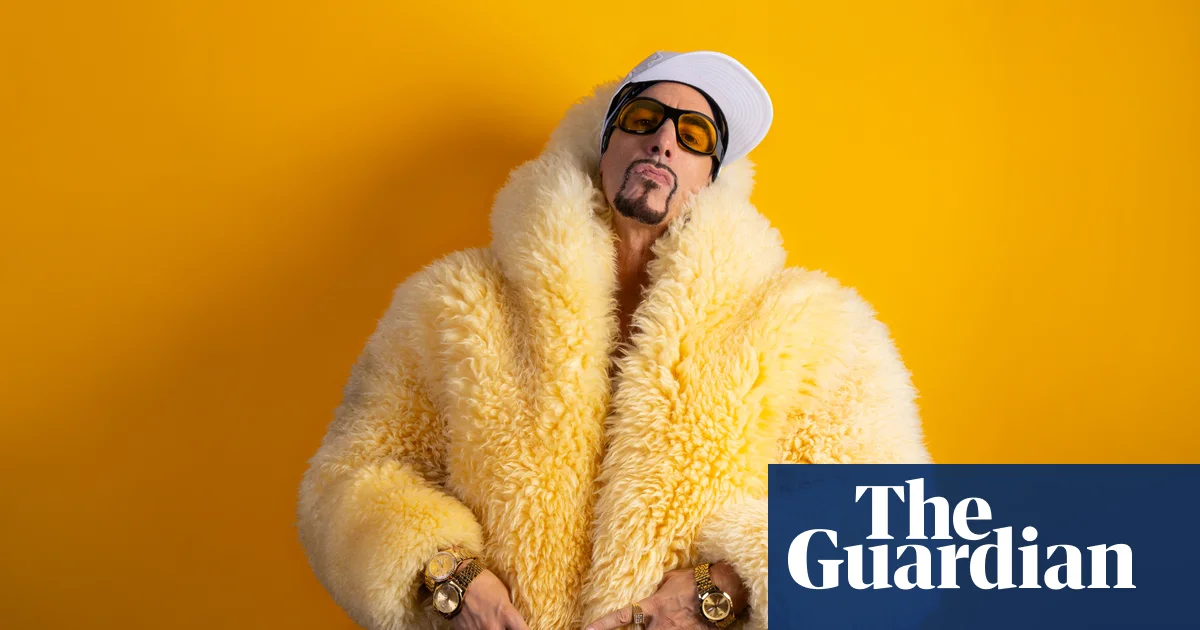
The article also records a collection of visual details that connect the new appearance to the character’s established presentation. The Guardian reports that the same yellow Renault 5 associated with Ali G Indahouse was parked outside, this time carrying a homemade Uber sign. It describes Ali G wearing a diamond teddy bear and four watches, which he explains through a series of jokes about different local time zones. The newspaper also reports his comic explanation for the Rasta bonnet, including a claim that it serves as a place to hide drugs. These are presented as character performance rather than verified descriptions of criminal conduct. The details matter within the article because they show the comeback relying not only on a new film but also on recognizable props, exaggeration and invented personal mythology.
The interview’s deliberately unreliable answers
The Guardian’s transcript-like account repeatedly emphasizes that Ali G’s answers are not offered as conventional biography. When asked how he should be addressed, the newspaper reports that he supplied several comic nicknames while also giving a list of names he supposedly uses with the Staines benefits office. Asked about the absence of dreadlocks, he denied ever having them and instead attributed the bonnet to an implausible secret. The article also includes an extended, grotesque story about preparing for fatherhood, involving sex, a jacuzzi, a family home and an accidental death. The supplied evidence does not establish any of those comic anecdotes as real events. They are part of the interview’s reported performance, illustrating how the character turns ordinary questions about identity, clothing and family life into deliberately unreliable material.
What the evidence leaves open
The supplied material identifies The Guardian as the sole source for the interview and its claims, so the account should be read as a report of that publication rather than as independently corroborated evidence about the film or its production. The Guardian identifies Ali G: Who Iz I? as the new film associated with the conversation, but the supplied evidence does not give a release date or plot. It also does not establish that Sacha Baron Cohen conducted or personally participated in the interview; the excerpt identifies Rich Pelley as the Guardian journalist speaking with Ali G. Finally, the remarks about preventing World War Two remain remarks attributed to Ali G within the interview. They do not establish that a real-world plan exists, and the evidence does not clarify whether the line has meaning beyond the character’s comic performance. What is documented is the publication of a comeback interview, its Staines setting, the mix-up that produced that setting and the criticism surrounding the character’s return.