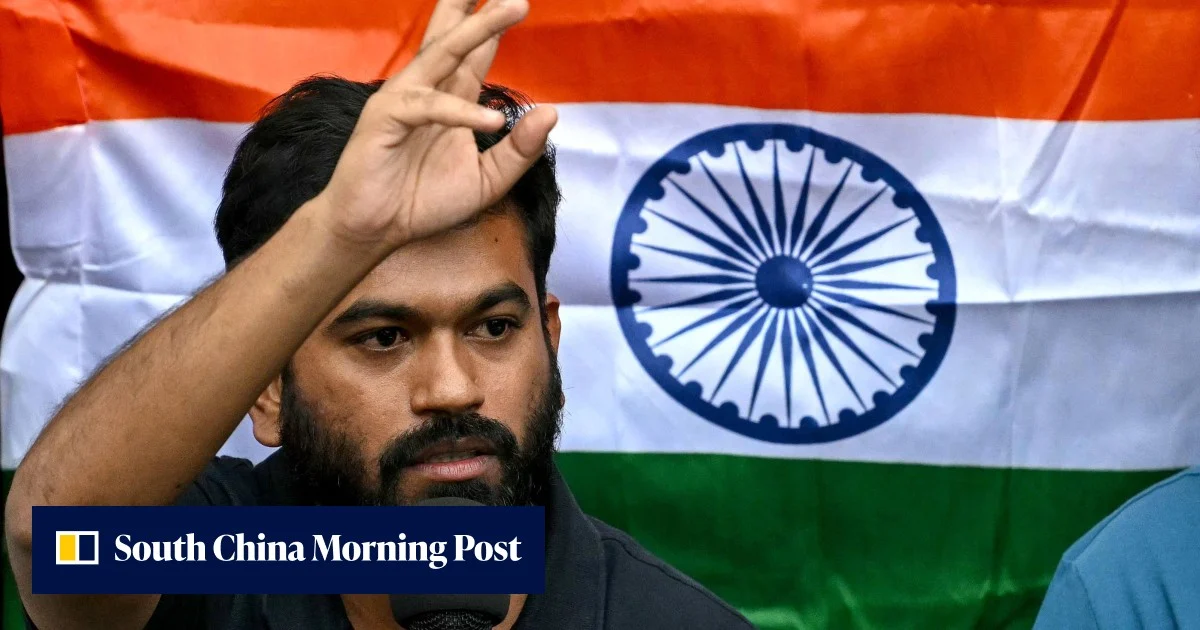
A detention before the rally Dipke’s detention placed the movement’s founder at the centre of a confrontation that continued after he was taken into custody. Multiple international reports identified him as the leader or founder of the Cockroach Janta Party and said police detained him ahead of a protest he had helped organise in New Delhi. The action occurred as demonstrators were preparing to gather in the city’s central business district, where the youth-led movement has been campaigning against changes to voter lists. The available reporting confirms the timing of the detention and the planned protest, but does not establish the full reason police gave for taking Dipke into custody.
The immediate political demand was directed at Gyanesh Kumar, India’s chief election commissioner. The Cockroach Janta Party, opposition groups and student organisations have called for his resignation or removal while challenging revisions to electoral rolls. That demand gave the protest a specific institutional target: the election authority and its leadership, rather than a general demonstration against the government. Reports describe the campaign as a continuing movement involving youth activists, students and opposition politicians, with the election commissioner’s position at the heart of the mobilisation.
Demonstrations continue despite security The detention did not prevent a protest from taking place. France 24 reported that hundreds marched in central New Delhi despite heavy security measures, while ABC reported that hundreds gathered amid a large deployment of police and paramilitary forces. The two accounts establish the broad scale of the gathering rather than a precise attendance figure. They also show that the protest continued even after the movement’s principal organiser had been detained, although the available material does not establish whether Dipke addressed the crowd or how long he remained in custody.
ABC’s account described central New Delhi as heavily controlled during the demonstration, with security forces surrounding areas where protesters assembled. France 24 likewise reported heavy security as people marched. Those descriptions place the rally in an environment of significant police presence, but they do not by themselves establish that every part of the protest was blocked or that clashes occurred. The locked reporting supports a picture of a large gathering under tight security, without providing a more exact account of arrests among the crowd or the eventual outcome of the event.
A campaign over electoral rolls The New Delhi rally followed repeated protests over revisions to voter lists or electoral rolls. The South China Morning Post described the demonstrations as almost daily, while ABC reported that protests had continued for nearly two weeks. EL PAÍS also described student mobilisation focused on alleged irregularities. Taken together, those reports show a sustained campaign rather than an isolated response to Dipke’s detention, although the sources use different descriptions of its frequency and do not establish a single official count of demonstrations.
ABC reported that protesters and opposition parties alleged the electoral-roll revision favoured the ruling Bharatiya Janata Party. The same report said the government or Election Commission denied that allegation. The competing positions are central to the dispute: activists and opposition parties are using the revisions as grounds to demand accountability from the election chief, while the denial rejects the claim that the process benefited the governing party. The available reporting does not independently resolve the allegation, so it remains important to distinguish the protesters’ and opposition parties’ claims from the government and Election Commission’s response.
The voter-list dispute has therefore connected an administrative process to a broader political argument about confidence in elections. The documented demands focus on the removal or resignation of Kumar, while the underlying accusations concern the fairness of electoral-roll revisions. That link is reported by ABC in describing both the allegation and the official denial. Other supplied reports support the existence of the voter-list controversy and the repeated protests, but do not independently confirm the specific allegation that the revisions favoured the Bharatiya Janata Party.
What is known about Dipke’s custody The Financial Times reported that Dipke was taken into custody for the second time in one week. That detail adds a short chronology to the detention, indicating that the October 16 action followed an earlier episode involving the same movement leader. It remains a single-publication detail and is therefore attributed to the Financial Times. The other reports corroborate the detention before the New Delhi protest, but the supplied material does not independently establish the earlier detention or provide a fuller account of it.
ABC reported that senior police officer Sachin Sharma said Dipke had been placed in preventive detention. That description supplies the police characterisation of the action, but it does not answer every question about the custody. The available reporting does not establish the complete legal or operational reason for the detention, its duration, or what happened to Dipke after the protest. Those limits matter because the detention is being reported through several accounts, while the more specific description of its status comes through ABC’s attribution to Sharma.
A movement facing competing claims The events in New Delhi bring together three documented elements: the detention of a youth-movement leader, continued demonstrations under heavy security, and a demand aimed at the chief election commissioner. The protests have been repeated and involve the Cockroach Janta Party alongside opposition and student groups. Their stated concern is the revision of voter lists, while the more specific claim that the revisions favoured the Bharatiya Janata Party remains attributed to protesters and opposition parties and is disputed by the government or Election Commission.
What the reports establish most clearly is that the detention did not end the mobilisation: hundreds still gathered in central New Delhi on October 16, according to France 24 and ABC, while the campaign over electoral rolls continued. What remains unresolved in the supplied material is why Dipke was detained, how long he was held and whether further action followed. The reporting also does not provide a precise protest count. Those unanswered details leave the immediate legal consequences unclear, even as the political dispute over Kumar’s position and voter-list revisions remains active in the documented accounts.