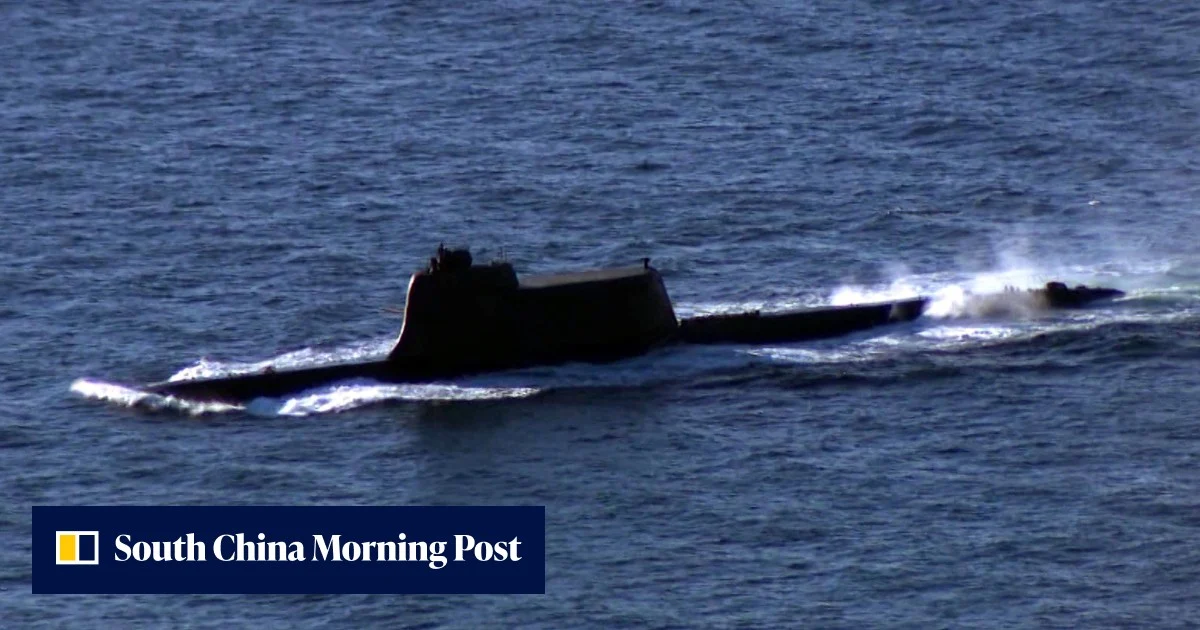
A reported underwater weapons test
KCNA said the Zam-2.0 test took place on Thursday, October 15, 2026. North Korea presented the weapon as a high-speed, precision-guided torpedo and said the underwater exercise was intended to verify technical improvements to the system. The announcement did not identify the precise body of water or other location where the test occurred. That missing detail limits what can be established about the setting of the exercise, including whether the test was conducted in conditions that would demonstrate the system’s performance in a particular operational environment. The central event, therefore, is a North Korean announcement of an underwater test rather than an independently documented account of the weapon’s launch or results.
KCNA described the result as a success and said officials overseeing the test viewed it as a major development for the country’s naval capabilities. In the agency’s account, the exercise was not simply a demonstration of a new weapon name: it was presented as a test of upgraded technology, including propulsion-related components. KCNA said the test verified core technology intended to improve propulsion efficiency and the performance of rocket-propulsion devices. Those statements establish how North Korea framed the event and what its state media said the test was designed to assess. They do not, on their own, provide measurements of speed, range, accuracy, endurance or any other performance characteristic for the Zam-2.0.
What North Korea says about artificial intelligence
The most prominent feature of the announcement was North Korea’s claim that artificial intelligence had been applied to the torpedo’s target-detection and guidance functions. In practical terms, the statement assigns the technology a role in identifying a target and directing the weapon, but KCNA did not explain how those functions operate or define what it meant by artificial intelligence. No details were provided in the supplied reports about sensors, onboard computing, communications, decision-making or the degree of human control involved. The phrase therefore describes a claimed function rather than a technically documented capability. North Korea’s wording adds an AI dimension to the weapon’s presentation, but it does not allow the system’s level of automation or precision to be assessed.
The distinction matters because the announcement combines a named weapons system, a claimed technical upgrade and a broad description of artificial-intelligence use without supplying test data. The Hindu reported that KCNA did not explain the meaning of artificial intelligence in this context. It also reported that South Korea’s military had not immediately commented on the announcement and included expert skepticism about claims of advanced digital capabilities. That reporting does not disprove North Korea’s account, but it underscores the narrow basis for assessing the Zam-2.0’s actual functions. At this stage, the public record supports saying that North Korea claimed AI-assisted detection and guidance, not that those capabilities have been demonstrated independently.
The propulsion claim and five-year development account
KCNA also linked the test to a longer development effort. The agency said the propulsion technology used in the torpedo had been developed through more than 180 related tests over the preceding five years. That figure is part of North Korea’s account of the weapon’s preparation and gives the announcement a chronology extending beyond the October exercise. It suggests that Pyongyang was presenting the test as the culmination of repeated work on propulsion rather than as an isolated event. The reports do not identify the individual tests, describe their conditions or explain how the more than 180 trials were counted. As a result, the number can be reported as a KCNA statement, while the technical progress it is meant to demonstrate remains a North Korean claim.
The propulsion reference also helps separate the elements that North Korea said were tested. KCNA’s account connected the exercise to propulsion efficiency and to the performance of rocket-propulsion devices, while the AI claim concerned target detection and guidance. These are distinct parts of the reported system: one relates to movement and propulsion, and the other to finding and directing the weapon toward a target. The available material does not show how the two elements were assessed together during the underwater test. Nor does it provide a technical description of the torpedo’s design. The most specific account available is therefore the one given by KCNA: an upgraded torpedo system, propulsion technology developed through more than 180 tests, and claimed AI support for detection and guidance.
Part of a recent naval weapons sequence
The torpedo announcement followed North Korean statements on October 14 about testing two types of strategic cruise missiles launched from underwater or from a submarine. The reports differ slightly in how they describe the launch platform, but agree that the missile activity preceded the Zam-2.0 announcement by one day. That sequence places the torpedo claim within a series of underwater-related weapons statements made by Pyongyang. The supplied material does not establish that the two events formed a single coordinated test or explain whether the systems were linked operationally. It does show that North Korea discussed the missile launches and the torpedo in close succession while presenting the broader activity as part of naval capability development.
The chronology is significant in the way North Korea described its military development, but it should not be extended beyond the documented announcements. The October 14 statements concerned strategic cruise missiles, while the October 15 exercise concerned the Zam-2.0 torpedo system. The available reports do not provide a common test range, a shared platform, a stated operational objective or a comparison between the missile systems and the torpedo. They also do not establish whether the weapons have entered service. What can be said is narrower: North Korea reported successive underwater or submarine-related weapons activities and described the torpedo test as a meaningful step for its navy.
What remains unverified
The supplied material does not independently confirm that the Zam-2.0 test succeeded, despite KCNA’s description of the result as successful. The Hindu reported that South Korea’s military had not immediately commented, while the wider reporting presented the test and its outcome as claims originating with North Korea or KCNA. The same limitation applies to the reported AI functions. There is no independent test assessment in the material, and KCNA did not explain the technical meaning of its AI description. The precise test location and further technical details were also not disclosed in the supplied reports. Those gaps do not erase the announcement, but they define its evidentiary status: a multi-source report of what North Korea said, rather than independent verification of the weapon’s performance.
For now, the Zam-2.0 announcement adds another claimed element to North Korea’s effort to present its naval weapons development as advancing. The country says it tested a high-speed, precision-guided torpedo, verified upgrades involving propulsion and applied artificial intelligence to target detection and guidance. KCNA also tied the propulsion work to more than 180 tests over five years and called the result significant for naval development. Those are the documented claims. The material does not establish the torpedo’s exact location, technical specifications, operational status or independently measured success. Any assessment of the system’s real capabilities will therefore depend on evidence beyond the announcement and the reports currently available.
SOURCES
- The HinduNorth Korea says it tested new torpedo system with AI capabilities
- Korea HeraldN. Korea conducts underwater test of new precision-guided torpedo using AI: KCNA
- South China Morning PostNorth Korea says it tested new torpedo with AI tech
- EuronewsNorth Korea says it tested new AI-powered torpedo system
- The Japan TimesNorth Korea says tested AI-assisted torpedo system