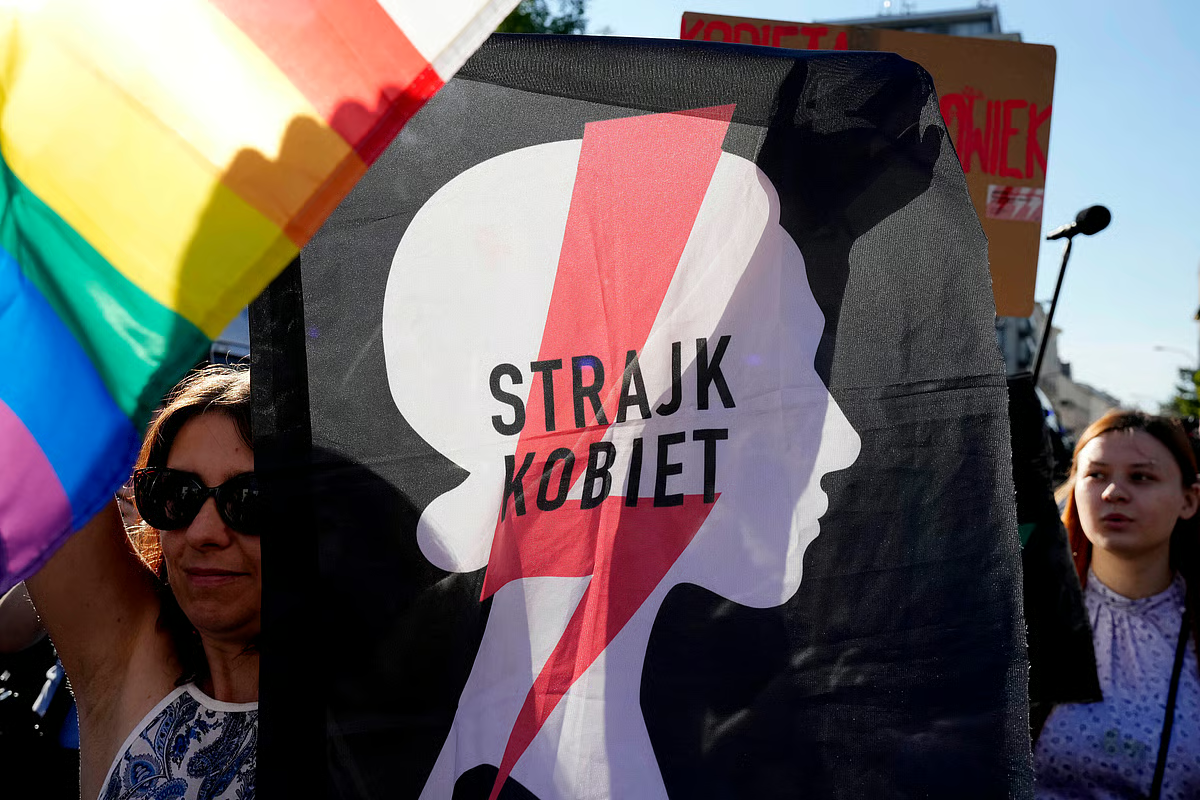
The protests reflected two connected grievances: opposition to Poland’s restrictive abortion regime and frustration with the pace and substance of the government’s response. Demonstrators called for abortion to be available legally and without charge, while women’s organizations accused the Tusk government of inaction or of failing to fulfil its earlier promises to liberalize the law.
The scale was national, although the reports do not establish a single precise count of participants or locations. Euronews, The Hindu and Al Jazeera described protests in more than 20 Polish cities and towns, including Warsaw. Tagesschau reported demonstrations in 28 Polish cities, a figure that differs from other accounts, which described the geographic reach more broadly or gave a count of 26 Polish cities alongside a demonstration in London.
The timing sharpened the political message. The demonstrations were held six years after a 2020 ruling by Poland’s Constitutional Tribunal that tightened abortion restrictions by banning abortions in cases involving severe fetal abnormalities or congenital defects. The anniversary connected the current protests to a legal change that the supplied reporting identifies as a major expansion of the restrictions already in place.
The rallies also followed a parliamentary vote on two bills intended to ease the restrictions. The measures had recently passed parliament but were expected to face a veto from conservative President Karol Nawrocki, leaving their prospects uncertain and reinforcing activists’ criticism that legislative action had not yet produced wider access to abortion.
According to reporting by The Hindu, Euronews and Al Jazeera, Zofia Marcinek of the Abortion Dream Team described the draft laws as token gestures rather than a genuine attempt to reform abortion law. Her assessment was that the government knew the measures were unlikely to survive a presidential veto and was seeking to appear active on abortion rights ahead of the next parliamentary election.
Marcinek’s criticism went beyond the fate of the two bills and focused on the gap between political promises and access in practice. The reports present that argument as an activist assessment, while independently corroborated reporting establishes that demonstrators were demanding broader rights and that women’s organizations were accusing the government of failing to act on reform.
The demonstrations therefore placed the government under continued pressure from abortion-rights campaigners even after parliament approved the two measures. The central dispute was not whether reform had been discussed, but whether the steps taken could overcome the presidential veto expected by the reporting and deliver the free and legal access sought by protesters.
The available accounts consistently describe thousands of participants and a nationwide protest movement, but they do not provide a precise national attendance figure. They also differ on the exact number of Polish locations and do not establish that the demonstrations themselves continued across both October 22 and October 23; October 23 was the publication date for some coverage of the October 22 protests.
SOURCES
- EuronewsWomen protest across Poland over stalled abortion law reforms
- Al JazeeraThousands protest across Poland for access to free and legal abortions
- The HinduWomen are protesting around Poland for free access to legal abortions
- Deutsche WellePoland: Thousands protest for more abortion rights
- TagesschauIn 28 Städten: Proteste für ein liberaleres Abtreibungsrecht in Polen