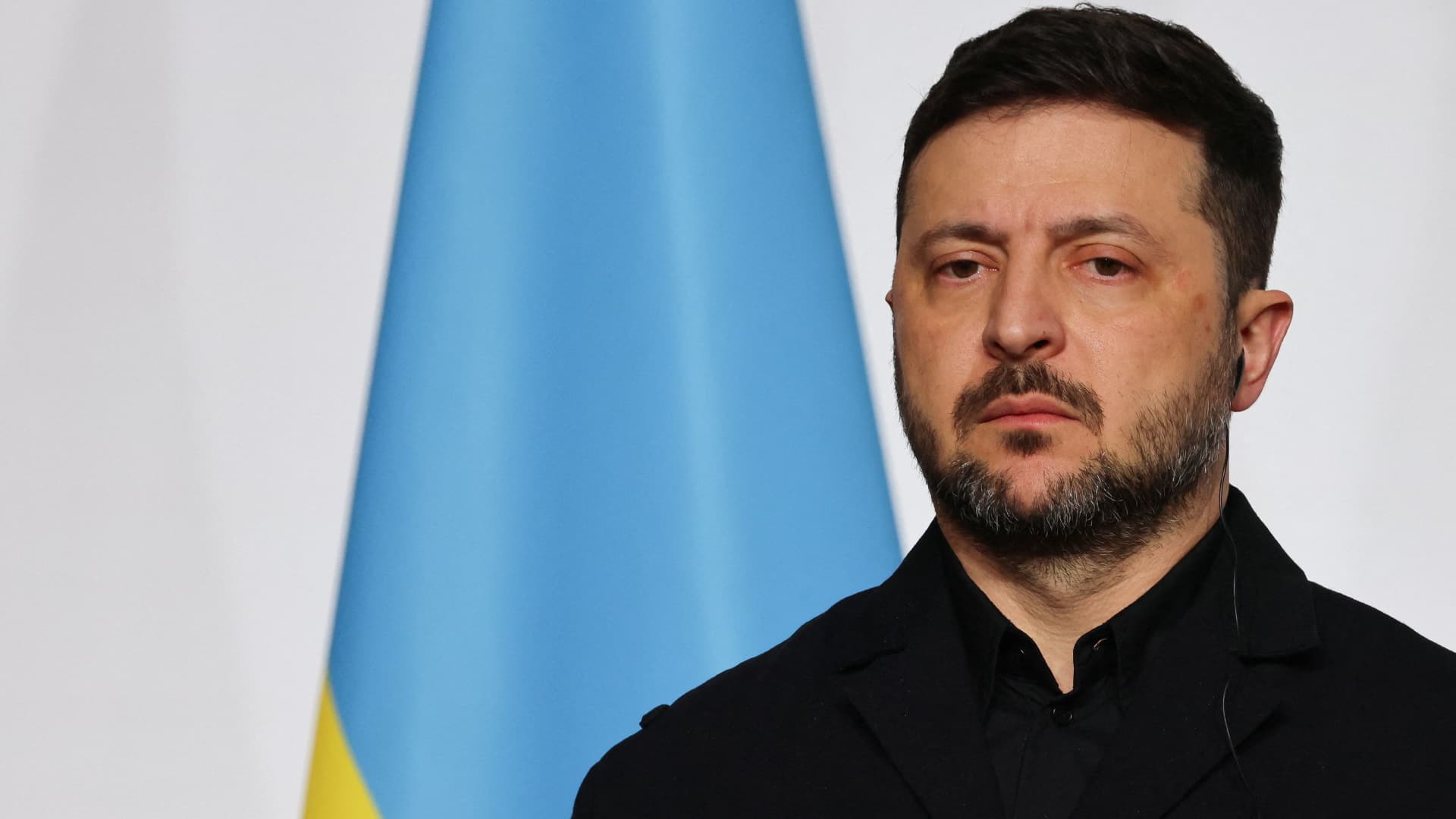
A renewed campaign against energy sites The central development reported by multiple international news organizations was a return to attacks on Russian oil refineries or energy infrastructure. Financial Times, Bloomberg Markets, CNBC, BBC News, the South China Morning Post, The Guardian, NPR, Al Jazeera, Deutsche Welle and PBS NewsHour all described either a resumption of strikes or an announcement that renewed attacks would take place. The reporting does not establish a complete operational picture, but it consistently identifies October 15 as the day on which the pause ended or Ukraine declared that it had ended.
The decision was linked directly to Zelenskyy. Reports varied in their wording: some said the Ukrainian president announced that attacks would resume, while others described him as ordering a restart or declaring that a pause was over. The Fact Lock supports the narrower formulation that Zelenskyy said Ukraine would resume strikes on Russian oil refineries or energy sites. That distinction matters because the supplied evidence confirms the public position but does not provide an independent account of every subsequent military action or establish the full scope of any operational order.
The Ryazan report A specific incident was reported in Russia’s Ryazan region early on October 15. NPR reported that Ukrainian drones attacked a refinery there, while the South China Morning Post attributed the account to the regional governor and The Guardian reported that Moscow accused Ukraine of striking the facility. Because the supplied material does not independently verify the incident, the report should remain attributed rather than being presented as an established fact. The available evidence therefore supports saying that a Ryazan refinery attack was reported, not that its precise circumstances or effects have been conclusively established.
The Ryazan account also illustrates the limits of the early reporting. The sources do not agree on the evidentiary basis for the allegation: NPR refers to officials, The Guardian places the accusation with Moscow, and the South China Morning Post cites the regional governor. Those differences do not overturn the broader, multi-source reporting that Ukraine announced or appeared to resume attacks, but they do limit what can responsibly be said about the individual strike. No independently verified assessment of the facility’s condition is supplied.
A ceasefire with disputed status The reported restart followed an energy-ceasefire initiative associated with Donald Trump. Several outlets connected the pause in Ukrainian refinery attacks to Trump’s call for a halt to strikes on energy targets. The evidence establishes that the initiative was part of the chronology, but it does not establish that Russia and Ukraine had concluded a formal, mutually accepted agreement. Some reports described a proposed or unilateral arrangement, while others characterized it as an announced or brokered ceasefire.
Reports that the ceasefire effort had broken down were themselves presented with attribution. CNBC, BBC News, The Guardian, Deutsche Welle, PBS NewsHour and NPR described the arrangement as having failed, with accounts saying Russia continued attacks, ignored the understanding or did not accept it. The Guardian specifically reported that neither side had agreed to the ceasefire. Taken together, the reports support describing the initiative as a proposed or announced pause that did not produce a sustained halt, rather than as a definitively ratified truce that both governments formally accepted.
The competing descriptions are important to the political meaning of the episode. From Kyiv’s perspective, the reporting presents the pause as over after what Ukrainian officials described as continuing Russian attacks. Other accounts emphasize that the arrangement may never have been mutually accepted in the first place. The available evidence therefore shows a breakdown in the ceasefire effort and a return to Ukrainian attacks, but it does not resolve which side’s interpretation of the arrangement should be treated as definitive.
Friction with Washington The reports also described a worsening dispute between Zelenskyy and the United States over support and communications. According to the Financial Times and BBC News, Zelenskyy criticized what he described as a withdrawal or reduction in U.S. intelligence sharing and a weakening or slowdown of Starlink satellite connectivity. Those reports attribute the criticism and allegations to the Ukrainian president. The supplied evidence does not establish why intelligence sharing or connectivity may have changed, whether the changes were deliberate, or how they affected the reported refinery operations.
That dispute forms part of the context surrounding the collapse of the energy-ceasefire effort, but the source material does not establish a causal connection between the reported changes in U.S. support and the resumption of strikes. Nor does it establish that the disagreement itself produced a particular military decision. What can be stated is that the episode brought together three reported developments: Zelenskyy’s declaration that attacks would resume, Trump’s associated energy-ceasefire initiative, and Ukrainian criticism of alleged reductions in intelligence sharing and Starlink service.
What remains unknown The supplied reports do not establish the total number of strikes, the full extent of damage or any casualties resulting from the reported refinery attacks. They identify the broad resumption and one attributed incident in the Ryazan region, but they do not provide a comprehensive damage assessment or a verified list of additional sites. Those omissions make it impossible, on the available evidence, to measure the operational scale of the renewed campaign or its immediate effect on Russian energy infrastructure.
The evidence does, however, support a clear chronological conclusion. On October 15, Ukraine announced or was reported to have resumed strikes on Russian energy targets after a short and contested pause linked to Trump’s ceasefire initiative. Zelenskyy said the attacks would restart, while reports attributed the failure of the pause to continued Russian attacks or Moscow’s refusal to accept the arrangement. The status of the ceasefire, the verification of the Ryazan incident, the scale of the attacks and the consequences for energy facilities all remain more limited than the headline development itself.
SOURCES
- CNBC FinanceUkraine to resume strikes on Russian refineries, shattering hopes of an 'energy ceasefire'
- BBC NewsUkraine to restart strikes on Russian oil refineries, Zelensky says
- NPRUkraine resumes attacks on Russian oil refineries, officials say, after brief truce
- South China Morning Post‘We’re done’: Ukraine resumes Russian refinery strikes as Zelensky defies Trump
- Financial TimesUkraine to resume strikes on Russian refineries, Zelenskyy says