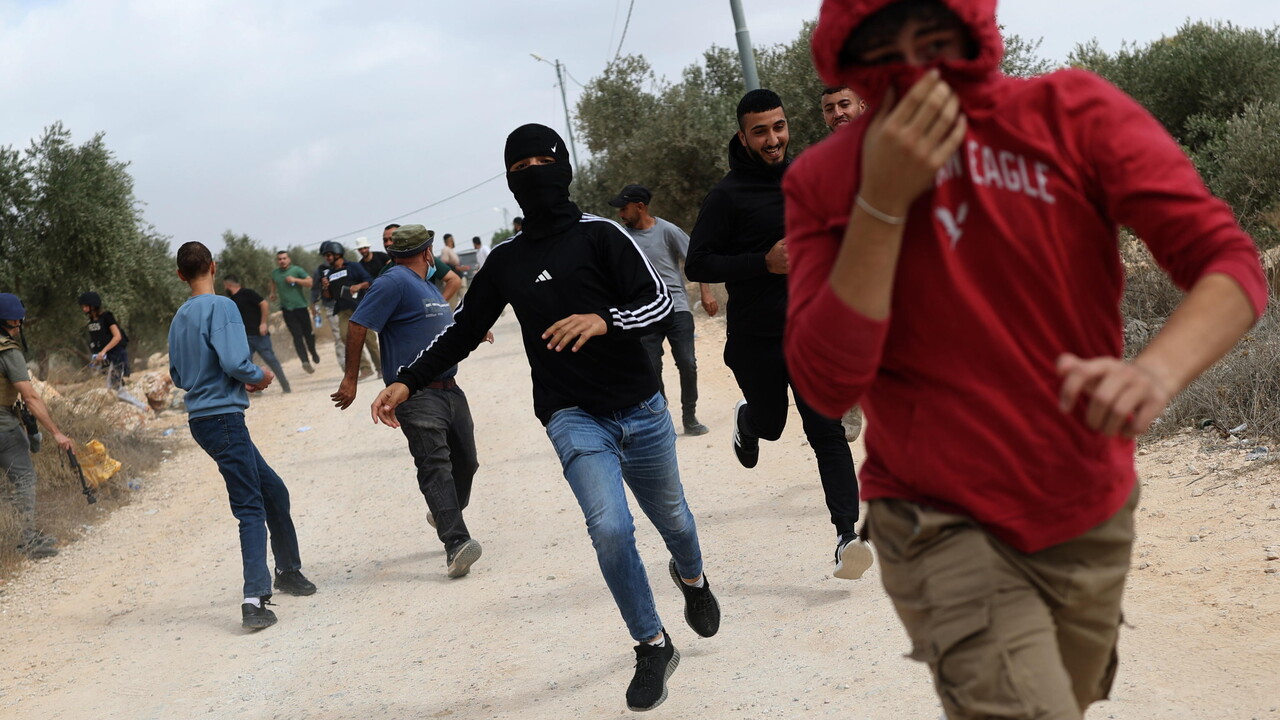
A reported attack in Taybeh The reported assault took place during a visit by European diplomatic representatives to Taybeh, a town in the West Bank. ANSA, Deutsche Welle and Clarín all reported that Israeli settlers attacked the delegation or vehicles carrying its members. The accounts identify the incident as involving European diplomatic personnel, rather than a confrontation involving only local residents or private visitors. The reports do not establish the total number of diplomats present, the total number of vehicles involved or the identities of the individual attackers. They do, however, agree on the central development: a European delegation came under attack in Taybeh on October 17, 2026, with the episode subsequently drawing a public response from Belgium.
The vehicles involved included Belgian, Polish and French diplomatic vehicles or vehicles carrying diplomats from those countries, according to the supplied reporting. ANSA’s account attributed its description of the vehicles to Israeli military radio, while Clarín also identified Belgian, French and Polish diplomatic representatives as members of the group. That reporting further said a Belgian vehicle was damaged. The available material does not provide a complete inventory of the vehicles or describe the extent of any damage beyond that account. It also does not specify whether every vehicle in the delegation was targeted or whether the attack unfolded in a single location or over a longer period during the visit.
Who was involved Clarín identified the Belgian consul general, French and Polish diplomats and Catholic representatives as part of the delegation. The report also said that a French mayor was assaulted during the incident. It identified him as Bernard Baudoux, the 78-year-old mayor of Aulnoye-Aymeries, and reported that his life was not in danger, citing information provided to AFP. These details come from a single supplied source and are therefore presented as attributed reporting rather than as independently established facts. Clarín also reported that a Belgian vehicle was damaged. The broader multi-source account confirms the involvement of Belgian, Polish and French diplomatic personnel, but does not independently establish every detail of the delegation’s composition.
Clarín reported that Maxime Prevot, identified by the publication as Belgium’s vice prime minister and foreign minister, condemned the attack. According to that report, Prevot said the Belgian team was safe. Clarín also attributed to him a demand that the responsible parties be brought to justice, along with a call for European sanctions. The Financial Times separately reported that the Belgian foreign minister said his government would press for EU sanctions against those responsible for the violence, while Deutsche Welle reported Belgium’s condemnation. Taken together, the reports show that Belgium treated the episode as a matter requiring an institutional response, not solely as a local security incident. The supplied material does not state whether any other members of the delegation were injured.
Why the delegation was in the area According to Clarín, the diplomatic delegation was conducting a field visit after attacks on Palestinian farmers. The report connected the visit to concerns about violence affecting Palestinians in nearby communities and described the delegation as observing conditions on the ground. This account is based on a single source in the supplied material and is therefore not presented as a independently corroborated explanation of the visit. It does provide the reported chronology: the delegation’s presence in Taybeh followed attacks on Palestinian farmers, after which the European representatives visited the area. The sources do not establish whether the delegation had a formal mandate beyond that field visit, nor do they provide a detailed itinerary or say how long the group had been in Taybeh before the reported attack.
The chronology described in the available reports therefore has several distinct elements. First, European diplomatic representatives travelled to Taybeh in the West Bank. Second, the group’s vehicles were reportedly attacked by Israeli settlers. Third, Belgium issued a condemnation and said it would pursue a European response. Clarín’s account adds the reported assault on the French mayor and damage to a Belgian vehicle, while ANSA’s account specifically described attacks involving vehicles associated with Belgium, Poland and France and attributed that information to Israeli military radio. No supplied source gives a precise sequence for the reported physical actions, identifies how many people participated or explains how the delegation left the area. Those omissions limit what can be concluded about the incident’s exact progression.
Belgium’s call for sanctions Belgium’s response gives the episode its wider diplomatic significance. The country condemned the reported attack and said it would press for EU sanctions against those responsible or those supporting the violence. The sanctions position is documented in reporting by the Financial Times, Deutsche Welle and Clarín; the Financial Times attributed the statement to Belgium’s foreign minister, while Clarín attributed the fuller comments to Prevot. The reports do not say that the European Union has adopted sanctions, approved a measure or identified specific individuals for penalties. They describe a Belgian call for action and pressure for a possible European response. The distinction matters because the supplied evidence establishes Belgium’s position, but not the outcome of any EU process.
Prevot’s reported remarks, as relayed by Clarín, also framed the incident as part of a broader security concern involving Palestinians, journalists and diplomats. That source reported that he said diplomatic duties, reporting and olive harvesting should not expose people to attack, and that Israeli authorities should protect Palestinians and ensure the safety of diplomats and journalists. These statements are included as attributed political commentary, not as independently verified findings about responsibility or policy. The supplied material records Belgium’s criticism of settlement expansion and its call for accountability, but it does not provide an official response from the Israeli government, a statement from the settlers or a description of any investigation. As a result, the diplomatic dispute is documented more fully than the incident’s investigative aftermath.