A diplomatic visit becomes the focus of an attack
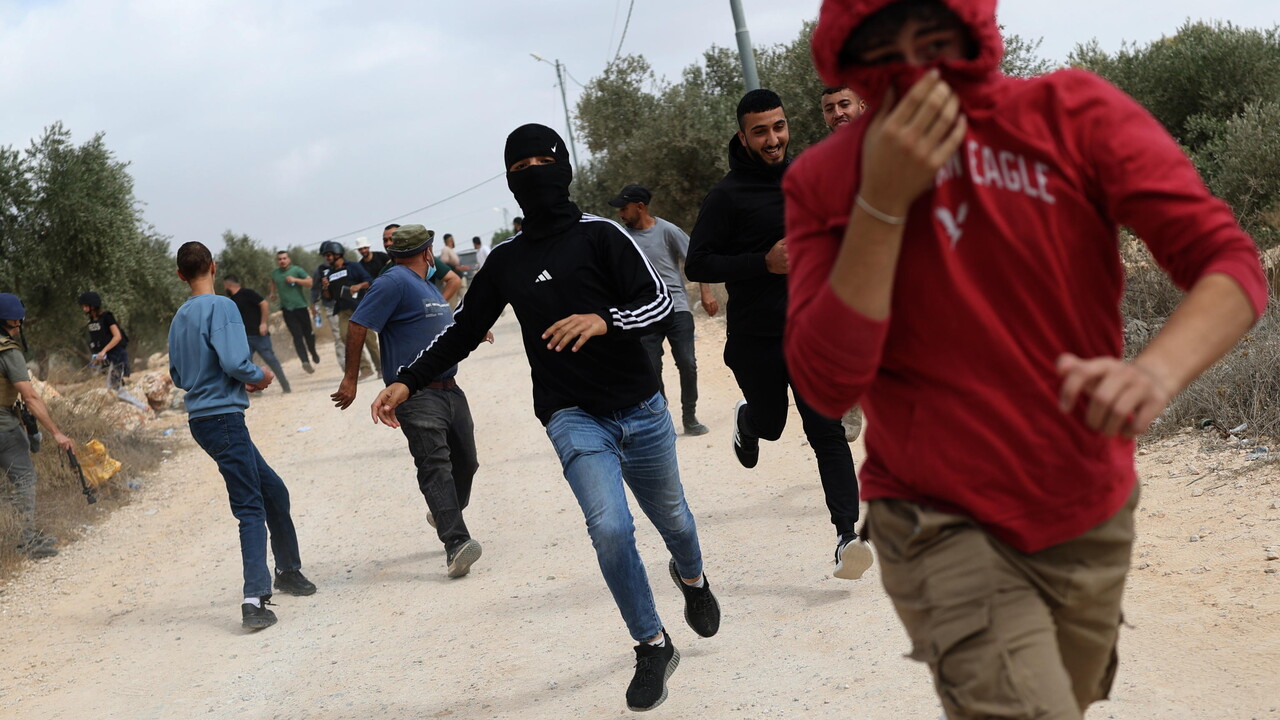
The reported attack took place near Taybeh as a European group visited Palestinian farmers or olive harvesters. Accounts consistently describe the targets as European diplomats or vehicles carrying them, while individual reports identify Belgium’s consul general, French and Polish diplomats and Catholic representatives among those present. Reports also describe Belgian, Polish and French diplomatic vehicles as having been targeted. The differing descriptions reflect the breadth of the group involved rather than a settled disagreement about whether diplomats were present.
Bernard Baudoux, the 78-year-old mayor of Aulnoye-Aymeries in France, was reportedly assaulted and knocked to the ground. The account places him near a vehicle with diplomatic plates as the incident unfolded. Belgium also said that a Belgian vehicle was damaged. Those details broadened the reported episode beyond an assault involving diplomatic personnel: a visiting local-government official and a diplomatic vehicle were also described as having been caught up in the violence.
The available reporting does not establish the identities or number of the alleged attackers. Several reports describe them as masked Israeli settlers, but no individual names or confirmed group size are provided in the supplied material. That limitation matters when separating the reported description of the incident from questions of criminal responsibility, which the available accounts do not resolve.
The olive harvest context
The delegation was visiting Palestinian farmers or olive harvesters, placing the confrontation in the context of the seasonal harvest. The supplied reports describe the visit as taking place amid violence affecting Palestinians seeking to gather olives. The Guardian characterized the reported incident as part of an attempt to stop Palestinians from harvesting olives on their land, while other accounts described the delegation as visiting farmers after earlier attacks. The common documented point is that olive harvesting was central to the visit and to the circumstances surrounding the confrontation.
The chronology presented in the reports links the diplomatic convoy’s visit to a period of attacks on Palestinian farmers and others. The supplied Euronews account said the incident followed assaults on Palestinian farmers and other people, while the Clarín report said the delegation was conducting a field visit after attacks on Palestinian agricultural workers. These reports establish the immediate context supplied for the visit, but they do not establish that every reported act in the wider period was carried out by the same individuals.
One additional account contains details that are not independently confirmed in the supplied material. The Guardian reported that the archbishop of Cambrai was also attacked and that three people were injured. Because that information appears as a single-source report among the supplied accounts, it is presented here as an attribution rather than as an independently established injury total or participant list. The broader reports confirm an attack and damage to a vehicle, but they do not consistently specify the number or severity of injuries.
Belgium calls for a European response
Belgium condemned the reported violence. Foreign Minister Maxime Prévot said Belgium would press for European Union sanctions against those responsible for, or supporting, the violence. He also said authorities should protect Palestinians and ensure the safety of diplomats and journalists. The sanctions position turns the episode into a broader diplomatic issue: the response described in the supplied reports is not limited to a demand for an inquiry, but includes a call for possible action at the European Union level.
The Belgian response also framed the incident as part of a wider concern about violence affecting several groups. Prévot’s statement, as reported by the supplied sources, referred to Palestinians, journalists and diplomats facing violence and linked his criticism to what he called Israel’s settlement policy. That is the Belgian government’s stated interpretation and policy response; the supplied evidence does not independently establish a causal explanation for the attack beyond documenting the reported setting and sequence.
Israeli responses and the dispute over framing
The Israeli military condemned the violence, describing the reported attack as a severe act of violence. Euronews reported that the military said the visit had not been coordinated with it and that no soldiers were at the scene. Those statements provide the military’s response and its account of its own involvement; they do not alter the multiple reports describing an assault on the diplomatic group and accompanying visitors.
The Israeli prime minister’s office disputed the critics’ framing of the incident, according to BBC News, and described that presentation as part of a smear campaign. That characterization is attributed to the prime minister’s office and is not presented as an independently verified finding. The supplied reports therefore contain two distinct elements: a broadly consistent account of violence involving European diplomats and visitors, and a political dispute over how the incident should be characterized.
What is established and what remains open
Taken together, the supplied sources establish a reported attack near Taybeh on 17 October involving European diplomatic personnel, accompanying visitors and vehicles associated with Belgium, France and Poland. They also establish the reported assault on Bernard Baudoux, the damage to a Belgian vehicle, the olive-harvest context, Belgium’s condemnation and call for European Union sanctions, and the Israeli military’s condemnation. These points are supported across multiple accounts, although the sources differ in how broadly they describe the delegation and its participants.
Several questions remain unresolved in the material provided. The identities and number of the alleged attackers are not established. The exact number and severity of injuries are also unclear, and the Guardian’s account of an attack on the archbishop of Cambrai and three injuries is not independently confirmed by the other supplied reports. The Israeli prime minister’s office’s dispute over the incident’s framing remains part of the official response, rather than a settled factual conclusion.
The immediate diplomatic consequence documented in the sources is Belgium’s stated intention to press for European Union sanctions. Whether that call leads to action is not established in the supplied material. For now, the episode stands as a reported assault involving European diplomats and foreign visitors during a Palestinian olive harvest, with condemnation from Belgium and Israel’s military, and with competing official interpretations of its political significance.
SOURCES
- EuronewsEuropean diplomats attacked by Israeli settlers amid rising violence in occupied West Bank
- The GuardianIsraeli settlers attack European diplomats in West Bank
- France 24Israeli settlers attack European diplomats, beat French mayor
- BBC NewsEuropean diplomats attacked by Israeli settlers in West Bank
- Deutsche WelleWest Bank: Israeli settlers attack EU diplomats