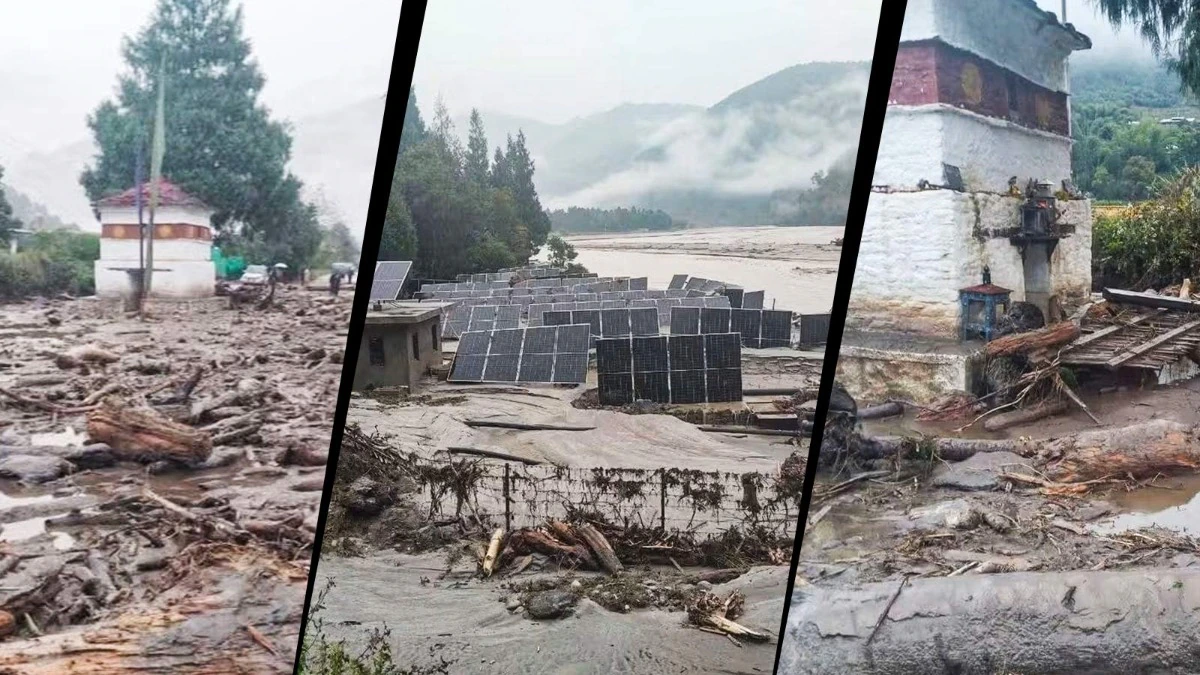
The outburst was reported on or before October 30, 2026, after water moved downstream through the Mo River system towards the Sankosh. The Hindu reported that nearly 7.4 million cubic metres of water had surged from Shintaphu Lake and that the surge could reach border areas within six to eight hours. Those volume and timing estimates came from that report and were not independently established in the supplied material.
The precise origin designation remains unsettled in the available reporting. Hindustan Times, citing Bhutanese media, identified the source as Shintaphu glacial lake below Wakila Mountain in Gasa district. A Times of India report likewise said local reports placed an outburst at Shintaphu Lake below Wakila Mountain, in Lungo, Laya Gewog, Gasa, on Thursday evening. Other supplied accounts referred to Lemthang or Sintaphu, so the location is presented here with attribution rather than as an independently confirmed site.
West Bengal authorities issued high-alert and evacuation warnings for communities along the Sankosh and its tributaries. Residents in riverbank villages in Alipurduar were reported to have left with cattle after evacuation instructions were issued, while other affected people were moved to safer ground. The available reports do not establish one agreed total for the number relocated.
In Alipurduar’s Kumargram area, the Times of India reported that residents near the Sankosh, including people in Kumargram tea estate, Kumargram forest village, Pakriguri and Bholka, were advised to watch for rising water levels and possible flash flooding. Bengal forest minister Manoj Kumar Oraon also warned residents near the river to remain alert.
The alert extended beyond West Bengal. Assam and parts of Bengal were placed on flood or high alert because of possible downstream effects, with Assam’s Dhubri district specifically identified in the reports. The supplied evidence establishes preparedness measures and warnings, but does not establish that flooding had occurred in Assam.
The Times of India reported damage at the Gasa Tshachu natural hot springs in Bhutan. It also reported that no injuries or deaths had been reported, while noting that darkness and the strength of the floodwaters limited the initial assessment. The same report said two Bailey bridges may have been washed away and that parts of the road to Laya village were impassable, citing Bhutan’s national newspaper Kuensel for the road information.
The downstream response was therefore based on the possibility of a sudden rise in river levels rather than a fully documented account of damage across the affected areas. The full extent of flooding, infrastructure loss and livestock losses remains unclear; the Times of India reported that an assessment of possible livestock losses was expected after the outburst.
SOURCES
- The HinduBhutan glacial flood triggers evacuations along India’s Sankosh River
- Times of IndiaBhutan lake outburst triggers flash flood alert along Sankosh river in Bengal
- India TodayGlacial lake outburst reported in Bhutan; Assam, Bengal districts on flood alert
- Hindustan TimesWest Bengal on alert after Bhutan glacial lake outburst, authorities monitor Sankosh river