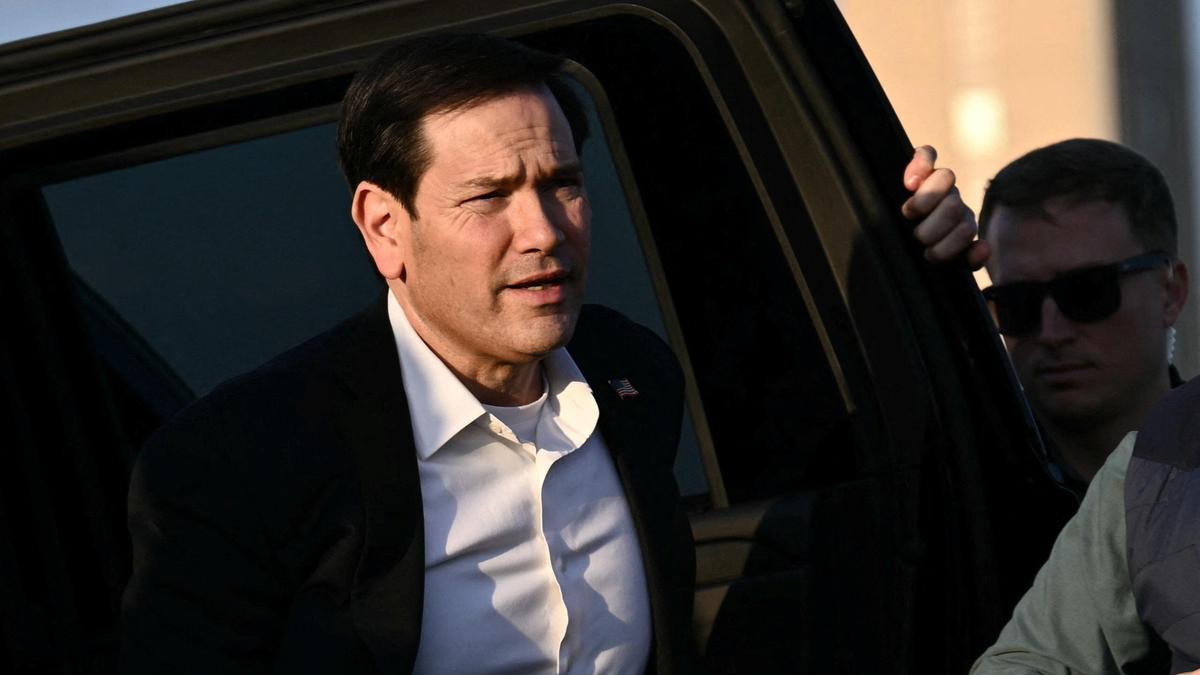
Rubio made the remarks in Florida before departing Homestead Air Reserve Base for a G7 foreign ministers meeting in Paris. He framed the decision as an example of confronting difficult security challenges despite the political cost, rather than as an action whose justification depended on public approval.
The defense came as the war’s unpopularity and economic effects were linked to political criticism of Trump’s policies. The Hindu and Clarín reported that disruptions to shipping through the Strait of Hormuz contributed to higher energy or gasoline prices, adding pressure on voters and helping fuel criticism of the administration.
Rubio also said negotiations with Iran were not close to a breakthrough. He described some Iranian demands as unacceptable, outrageous, ridiculous and unrealistic, while reiterating that Trump preferred a diplomatic solution. The supplied reporting said efforts were under way to revive talks but showed no clear progress toward an agreement.
The Hindu, Al Jazeera and Clarín, citing the Associated Press, reported that Iran was reviewing proposals presented by Qatar to address differences with Washington over Iran’s nuclear program. That detail was attributed to the Associated Press in the reports and is not independently established in the supplied evidence.
The available reporting establishes Rubio’s stated security rationale and his assessment of the diplomatic impasse, but it does not independently verify the alleged nuclear threat or provide a full account of the military actions involved. The supplied reports also conflict over whether his remarks took place on November 7 or November 8, so the precise date remains unresolved.
SOURCES
- The HinduRubio says Trump's war against Iran not 'necessarily popular' but needed to stop a nuclear threat
- ClarínRubio dice que la guerra contra Irán no es "necesariamente popular", pero sí necesaria
- Al JazeeraRubio says war on Iran unpopular but ‘necessary’ to stop nuclear threat
- The New Indian ExpressRubio says Trump's war against Iran not 'necessarily popular' but needed to stop a nuclear threat