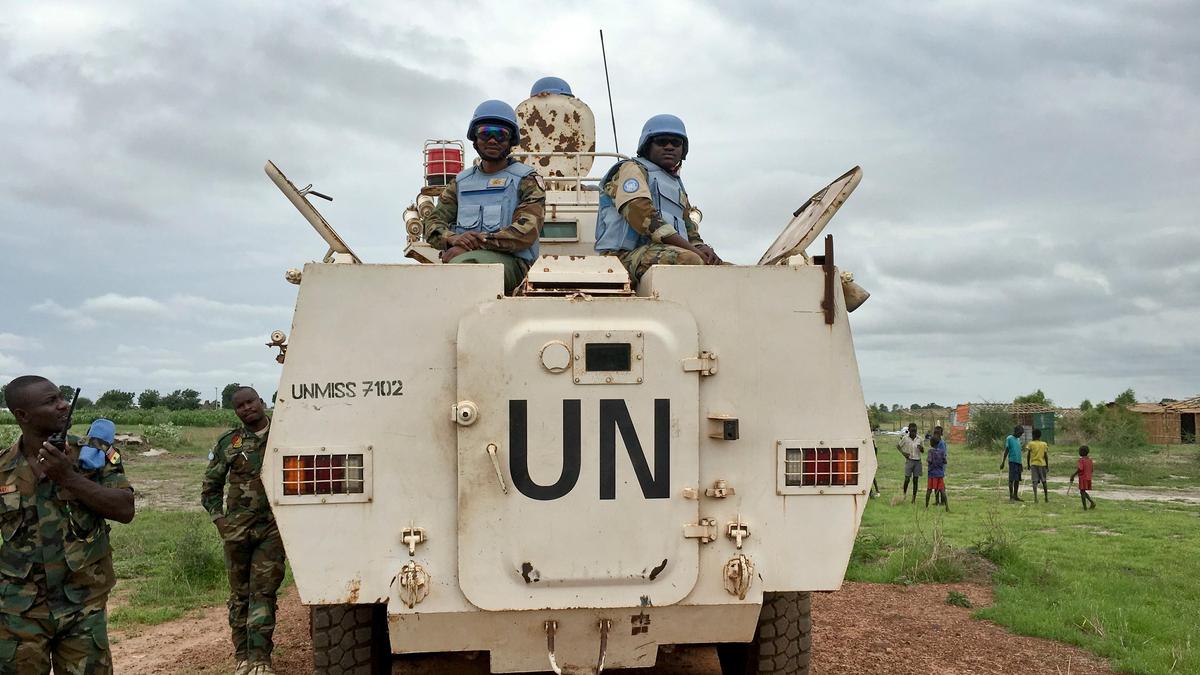
The attack took place in Abiemnom, a remote area near South Sudan’s border with Sudan. Amnesty said peacekeepers knew that a raid was likely and that warnings were available before the violence. The supplied reports do not establish the exact date of the attack.
The rights group’s allegation concerns both UNMISS and the South Sudanese government. The Hindu quoted Tigere Chagutah, identified as an Amnesty regional director, as saying that the authorities and the peacekeeping mission had sufficient information and time to take more effective preventive action, and that their failure to act more strongly cost lives.
Korea Herald reported that approximately three dozen UNMISS peacekeepers were based in the area when the attack was anticipated. Its account described the assailants as insurgents who raided the village, but the supplied reporting does not identify them more specifically.
The death toll is reported with different levels of precision. Al Jazeera and Korea Herald said more than 200 people were killed, while India Today reported that at least 213 people died. The broader figure is supported across the supplied reports; the more precise number remains attributed to India Today.
The available material presents the failure-to-prevent claim as Amnesty’s allegation rather than an independent official finding. It does not include an opposing account from UNMISS or South Sudanese authorities, and it does not establish whether stronger action would definitively have prevented the attack. The reports were published on November 11 or 12, 2026, while the attack is described only as having occurred earlier that year.
SOURCES
- Korea HeraldUN peacekeepers failed to protect civilians before South Sudan massacre, Amnesty says
- Al JazeeraAmnesty says UN, South Sudan officials failed to prevent village massacre
- India TodayAmnesty: UNMISS failed to act before South Sudan attack killed at least 213
- The HinduUN peacekeepers failed to protect civilians before South Sudan massacre: Amnesty