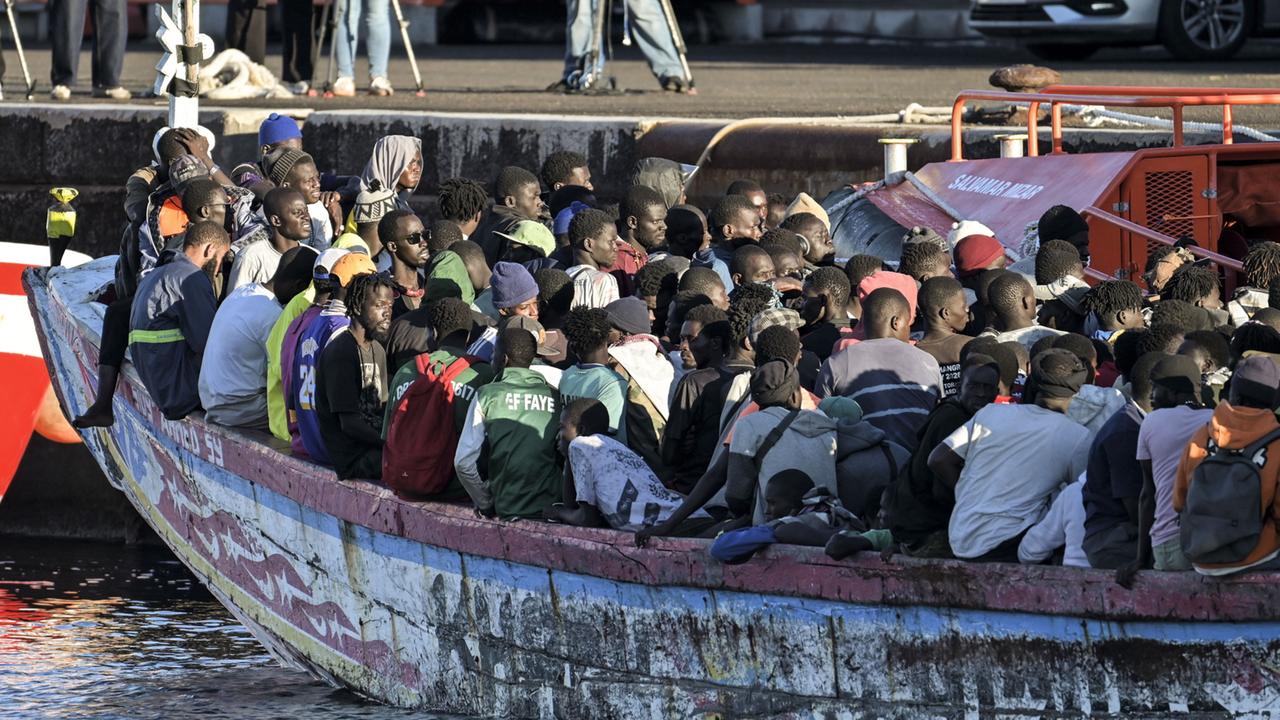
Spain’s Maritime Rescue Service said it rescued 1,488 migrants aboard 14 dinghies on Saturday. Other reports put the one-day total at roughly 1,500 to 1,600, reflecting differing counts or reporting windows. The rescue figure was reported as approaching or exceeding a previous daily record of 1,461 people set in November 2020.
Most of the reported rescues or arrivals reached El Hierro, an island with a population of about 12,000. The scale of the movement made the island the main immediate point of reception during the surge, although the available figures do not provide a complete distribution among the Canary Islands.
The arrivals were mainly from West Africa. Senegal was specifically identified as a departure country, while broader reporting described the route as involving people from sub-Saharan Africa. The crossings were made in dinghies, wooden fishing boats and other makeshift vessels, some of them overcrowded, on what sources describe as a dangerous Atlantic journey.
Spain declared a migration emergency in the Canary Islands on November 11 after a rise in arrivals in recent weeks. The declaration came as the islands continued to serve as a major entry point for people attempting the Atlantic crossing from West Africa.
The reports also show why the scale of the latest surge is difficult to summarize with a single daily figure: one account cited 1,324 people assisted, while another cited 1,488 rescued and other coverage described approximately 1,500 to 1,600 arrivals. The two-day total of nearly 2,200 is consistent with a broader weekend surge, but the available reporting does not establish a complete day-by-day breakdown.