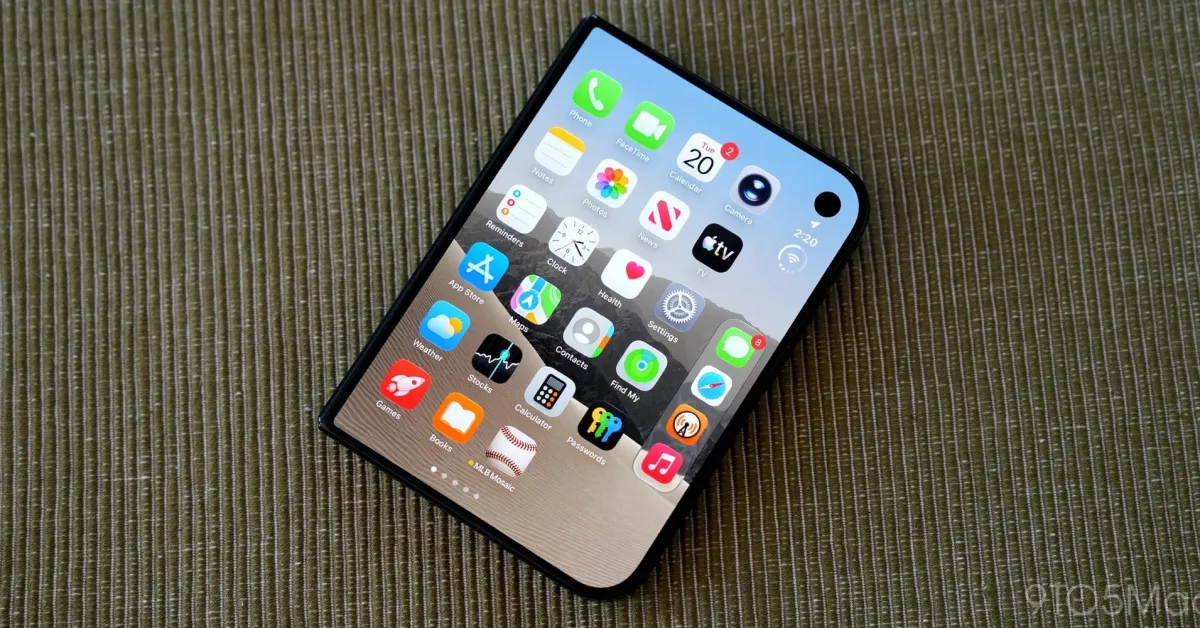
The feature uses the iPhone Duo’s front-facing camera and is available as an option in Settings under Touch ID & Passcode. The Verge describes it as a camera-based addition that does not require new hardware, while the supplied reports distinguish it from Apple’s Face ID system.
Before the beta, iPhone Duo users unlocked the device with Touch ID or a passcode. The new option is designed as a convenience for opening the phone, rather than as a replacement for the device’s existing authentication system.
That distinction limits what face recognition can do. The feature unlocks the device, but Touch ID or a passcode remains necessary for Apple Pay, access to passwords and other actions that require authentication. After approximately 45 minutes without an unlock, the user must authenticate with Touch ID or a passcode before face unlocking can be used again.
9to5Mac also reports that the face-recognition option does not work when the iPhone Duo is unfolded. In that configuration, users must continue to use Touch ID or a passcode, according to the report.
The software update adds a separate option to lock the iPhone Duo automatically when it is closed or folded. The setting is available under Display & Brightness and changes the device’s behavior when users move from the inner display to the outer display.
The handling of facial-recognition data is described as private and device-based. 9to5Mac attributes that claim to text in Apple’s Settings interface, while CNET reports that the data is processed on the device and cannot be accessed by iOS, apps, users or Apple. CNET further attributes that capability to an Apple-silicon feature called Secure Exclaves.
The reports describe iOS 27.3 as a developer beta, so the feature’s behavior in a final public release has not been established as unchanged. The reports also do not establish its broader availability beyond the beta or provide a complete account of its security limitations.