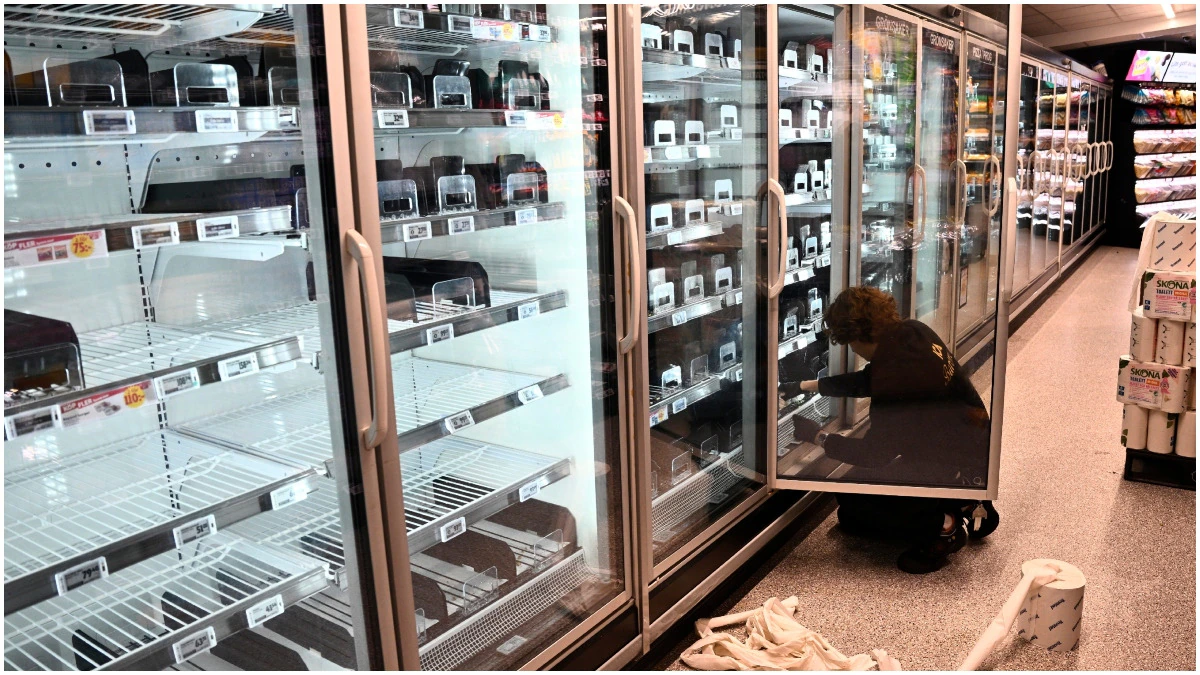
The reported incidents affected the systems that keep chilled and frozen food at safe temperatures. Dozens of supermarkets discarded large quantities of food after refrigerators and freezers were targeted, with the resulting waste reported across several European markets. The core event is corroborated by Handelsblatt, BBC News, Fast Company, The Register and India Today, although the reports do not agree on the precise number of countries or stores involved.
The reported technical effect was an increase or manipulation of refrigeration temperatures. Handelsblatt described temperatures in cooling systems being manipulated, while Fast Company reported that temperatures in some freezer and refrigerator units reached approximately 122 degrees Fahrenheit. Fast Company also reported that some affected units caught fire or generated heat, but the supplied reporting does not establish the cause of any fire.
Fast Company reported that the affected retailers included stores owned by Ahold Delhaize, Colruyt, ICA and Coop, as well as at least one IKEA store. In Sweden, the same publication reported that Coop confirmed problems at approximately seven of its 800 locations. The reported failures ranged from complete refrigerator and freezer shutdowns to equipment that continued to function only partially; one system was described as generating heat.
Coop Sweden said the affected locations were fully operational again by the time of its statement, Fast Company reported. The account was attributed to Carlos Cancino, head of press relations at Coop Sweden. That recovery status does not remove the immediate operational impact described in the reports, including spoiled stock and discarded food.
The geographic scope is less clear. Fast Company reported that the new wave affected grocery stores in Belgium, Luxembourg, Sweden, Ireland, the Netherlands and Estonia. BBC News reported that supermarkets in seven European countries were affected, while India Today characterised the incident as involving three European countries. The differing counts may reflect different reporting scopes, and the supplied material does not resolve the discrepancy.
Fast Company also reported that the incidents followed a similar cyberattack in France the previous month, affecting approximately 700 grocery stores. The chronology points to a repeated pattern of attacks involving refrigeration systems, but the available material does not establish that every reported incident formed part of one coordinated operation.
No perpetrator or motive is identified in the supplied reporting. That absence is evidence-bound: it does not establish that no attribution exists elsewhere, only that the material available for this report does not name one. The reports likewise leave unresolved whether the incidents across the different retailers and countries were connected, while confirming the practical consequence for supermarkets: disruption to refrigeration and significant food losses.
SOURCES
- Fast CompanyHackers may have found a surprising new target: Your grocery store’s frozen food aisle
- BBC News'All this food is now useless': Piles of rubbish after shop freezers hit by cyber-attack
- HandelsblattLebensmittel: Supermärkte melden mutmaßliche Cyberattacke auf Kühlschränke
- India TodaySuspected cyberattack disrupts supermarket refrigeration in 3 European countries
- The RegisterFrozen part II: Hackers remotely defrost produce in Euro supermarkets ... again